Hoole Handyman Garden Buildings
A DIY Garden Room build, assisted and project-managed by Hoole Handyman can save you thousands of pounds.
Garden buildings come in many different shapes, sizes and qualities. Some, unfortunately, are extremely cheaply constructed and are little more than glorified sheds. They are unlikely to prove durable over the longer term. In this article we are only considering buildings that are constructed to a standard very close to what is required for housing. That is, robust, highly insulated, well finished and durable.
How much can you save? A high quality, luxury, 5m x 3.5m Garden Room where all work is contracted out can easily cost £30,000 or more (some cost £50-60,000), but may have a material cost of just £10,000. You can expect to save about 50% on the fully contracted out install, using some of your own labour.
Can you cut timber with a hand saw and/or a hand-held power saw?
Can you follow a plan and use a tape measure?
Can you use a power drill?
Can you screw in screws?
Can you hammer in nails?
If you have these basic skills, then you are, with guidance and project management from Hoole Handyman, capable of building your own Garden Room. Let’s have a look at the step by step process:-
How big? Where? What Is It For?
So, you’ve decided you want a Garden Room.
What it is going to look like, and how big it is going to be will depend on where it will be located and to what use it will be put.
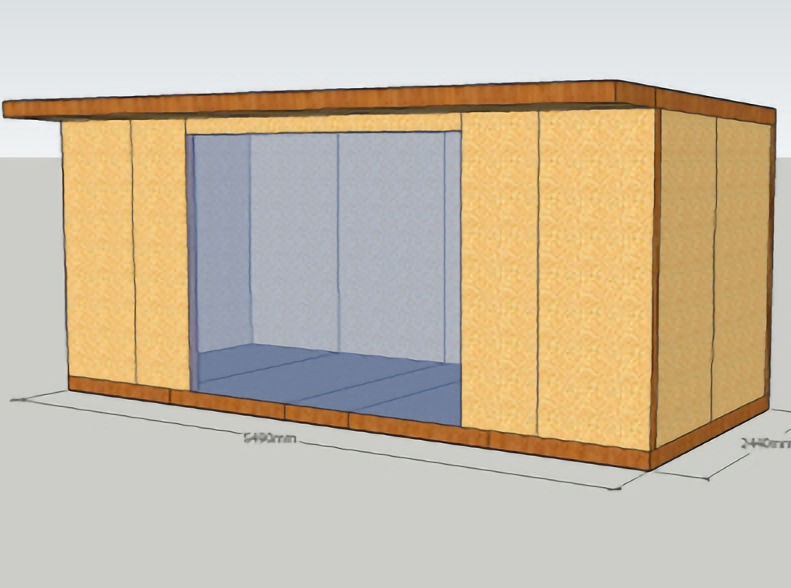
For some uses, a simple pent-roof design is appropriate. These can be provided as complete kits, or individually designed.
It is important to think about exactly how the building will be used as this will dictate many of the design and build decisions that need to be incorporated.
This image is a simple pent-roof kit. The build illustration in the following example is a pitched roof design that provides a light and airy space. In this case, because of proximity to the boundary, planning permission was required.
Planning and Design
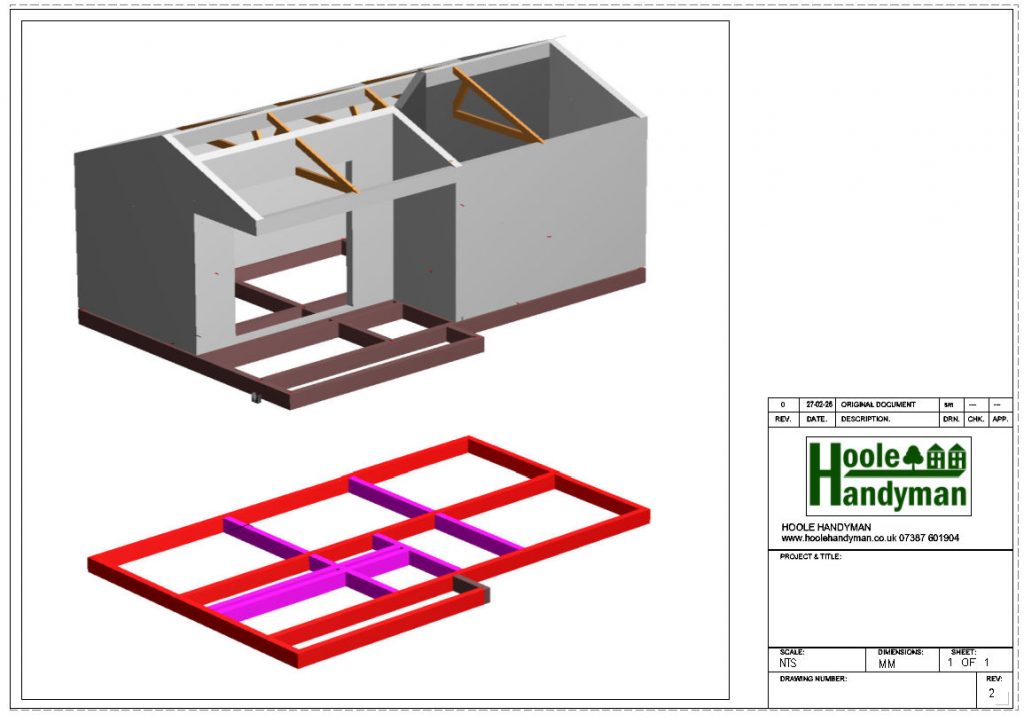
The project starts with layouts and drawings prepared by Hoole Handyman.
We can also provide guidance on any requirements for planning permission, and what is permitted under permitted development to help the customer make any necessary applications*.
If a garden building is less than 2.5m tall and/or is more than 2m from a boundary it is unlikely to need planning permission and can be built under permitted development.
* Hoole Handyman can only provide guidance. Planning advice is not provided on a professional basis and no liability is assumed.
Setting Out
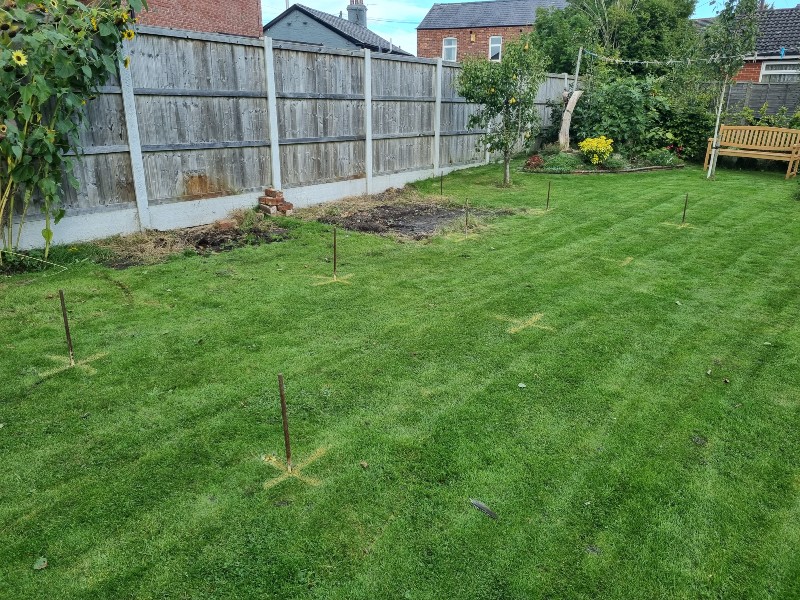
The ground is marked out ready for the foundations to be constructed. Hoole Handyman will assist in this process
Several different types of foundation can be used, but for a garden room, a pad or screw pile foundation is often easier than digging out for a traditional concrete strip foundation. No access is required for a mechanical digger, and the amount of waste soil is minimal
The ground conditions will be assessed and the most practical foundation solution will be designed.
Installing the Foundations
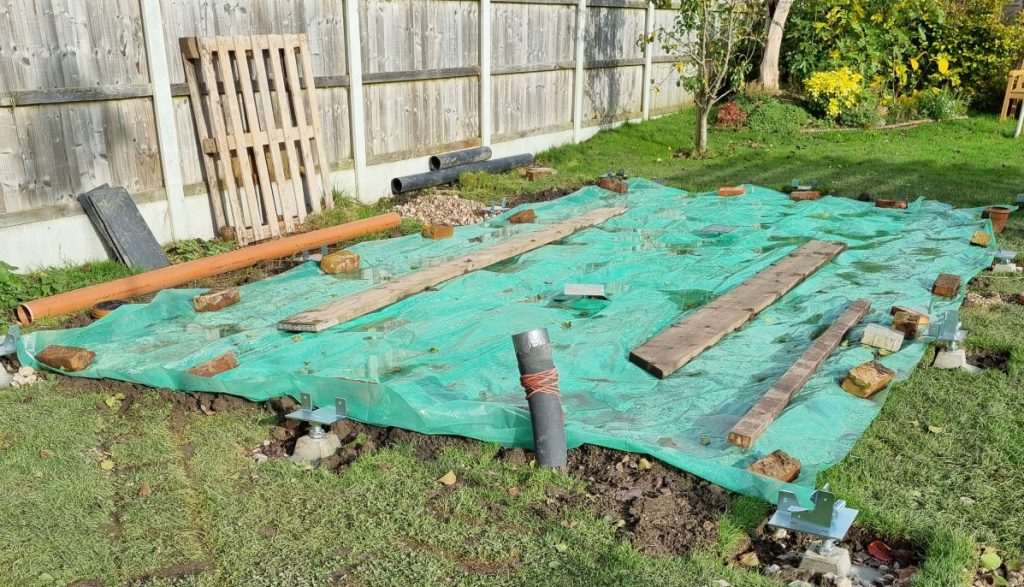
In this example, the foundations are adjustable concrete pads with support brackets.
Depending on the ground conditions, holes need to be dug and filled with compacted aggregates and/or concrete. Any ducts and pipework for services are also laid at this time.
Much of the digging and positioning can be done by the customer
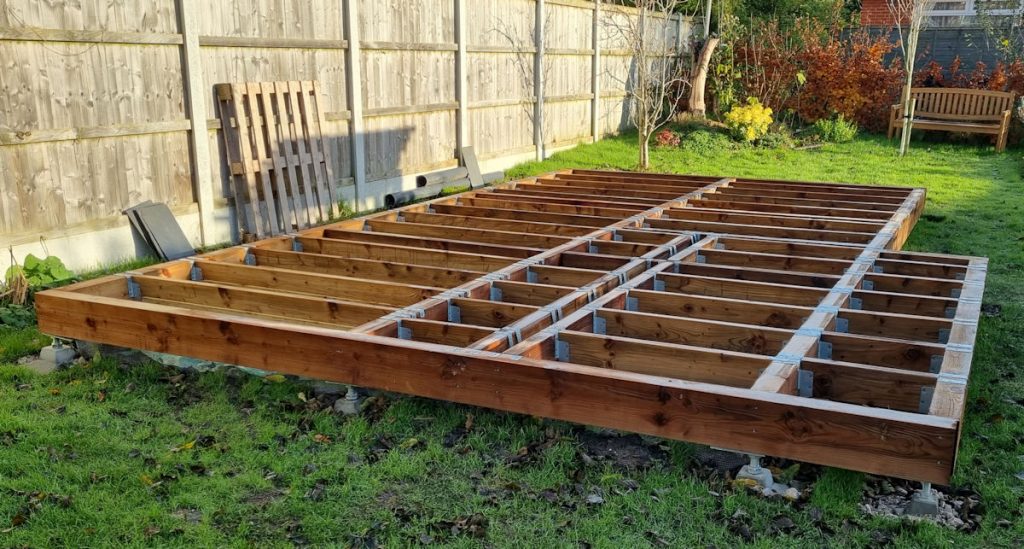
Building the Subframe
The subframe is built according to the plans
This is again a process where the customer can assist because the process involves little more than cutting timbers to length, screwing in various fasteners and nailing joist hangers in position for the joists.
Additional battens and panels are cut and installed to support the floor insulation panels.
Starting to Build the Structure
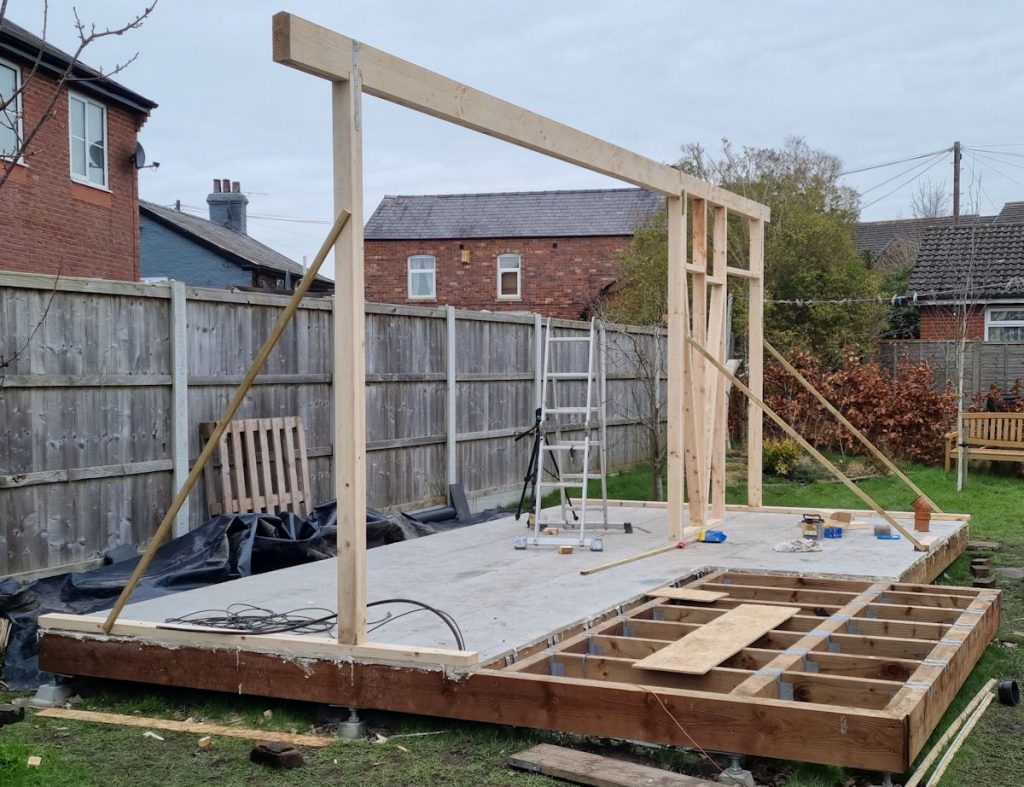
After the subframe, comes the floor. This is glued and screwed to the subframe – a task that is easily carried out by the DIY customer.
In this early phase of the build, some structural timbers may be installed. In this example there is a structural ridge beam in the pitch roof design which is constructed at this time.
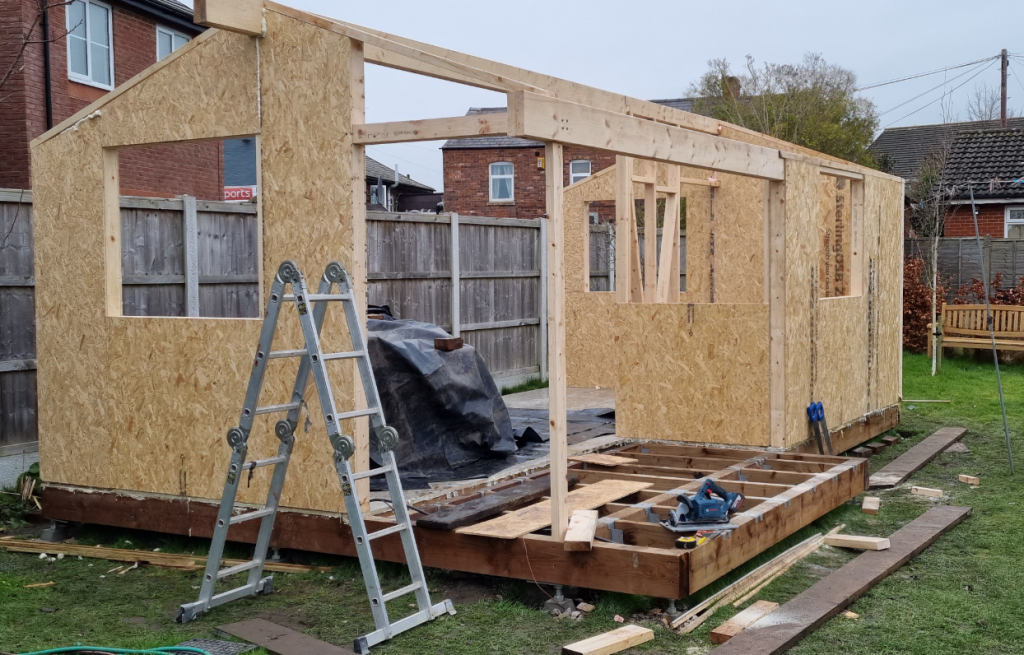
Building the Structure Using SIPs
Garden buildings designed by Hoole Handyman use SIPs; Structural Insulated Panels. These are a composite of strand board and expanded polystyrene core which provide both strength and insulation in a single panel.
The panels may come pre-cut as a kit, or can be cut on site to size. They are joined together with timbers and splines which are cut to length and secured with adhesives, screws and nails
This part of the build would most likely be a combined install by the customer and Hoole Handyman
Getting Watertight
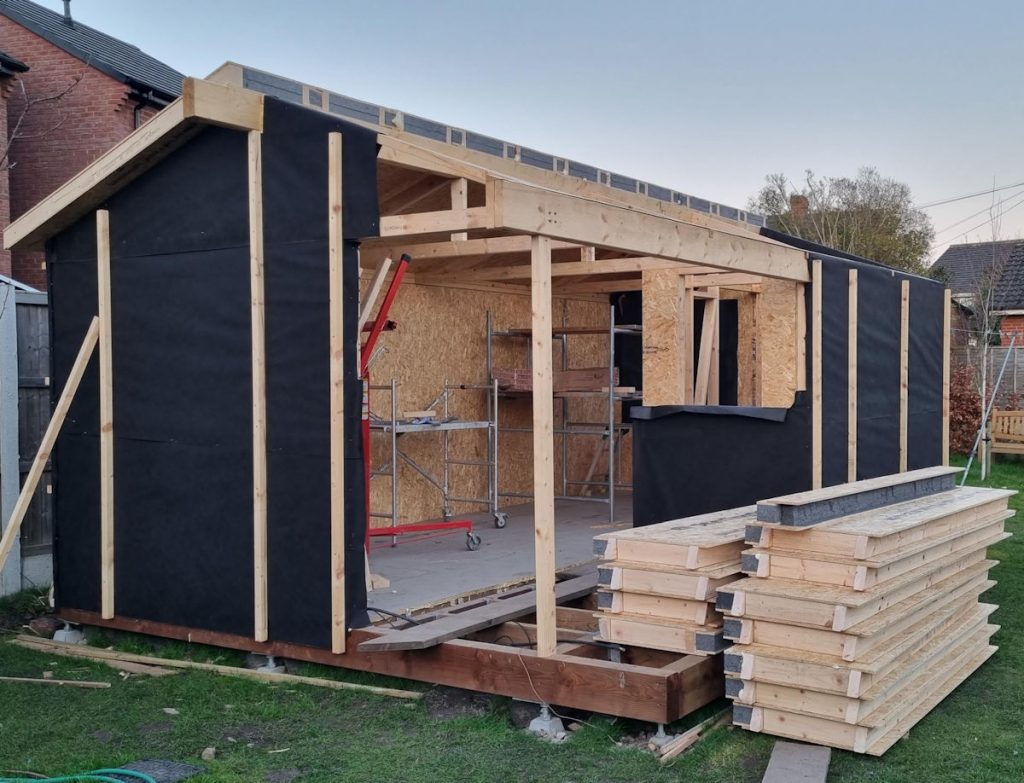
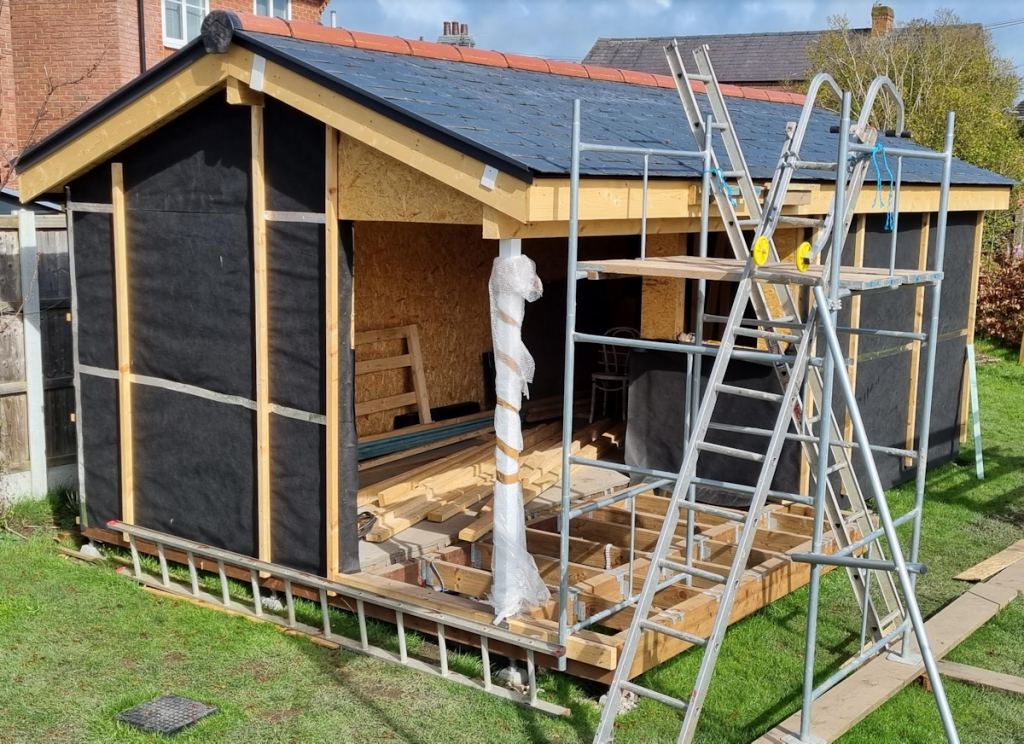
An important milestone in the build is getting all the SIPs secured and the building wrapped in a breathable but watertight membrane.
At this stage the internals will now remain dry. In this image the structural timbers in the roof and joining splines are visible.
The build process at this stage is measuring, cutting, gluing, nailing and screwing. This is another opportunity for much of the labour to be provided by the customer delivering cost savings in the build.
Covering the Roof
Getting the roof covering on is another significant milestone in the build.
Hoole Handyman recommends either EPDM rubber for pent roof buildings or slate for pitched roof, but many other choices are available including profiled steel, timber shingles and even standard roofing felt.
Slate roofing requires high accuracy in setting out, but the actual install process is well within the ability of a competent DIYer, and again offers an opportunity for labour cost savings.
Doors and Windows
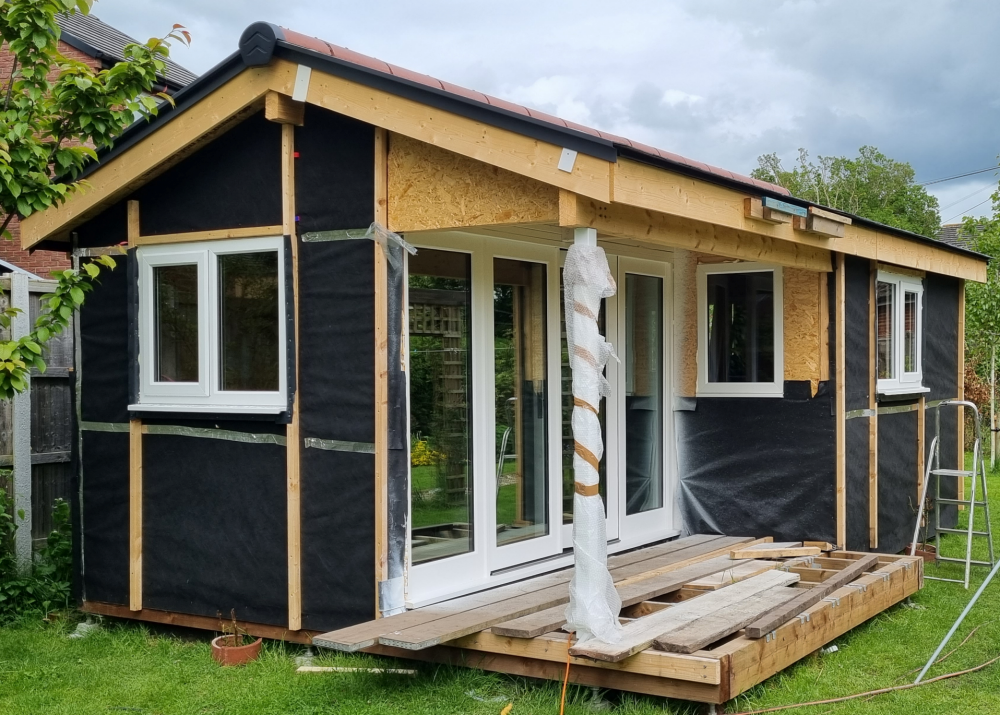
The doors and windows will be ordered according to the customers requirements and the size and shapes of the various openings.
Hoole Handyman will assist in ensuring this part of the build is carried out accurately and the installation is carried out to ensure water tightness.
External Cladding
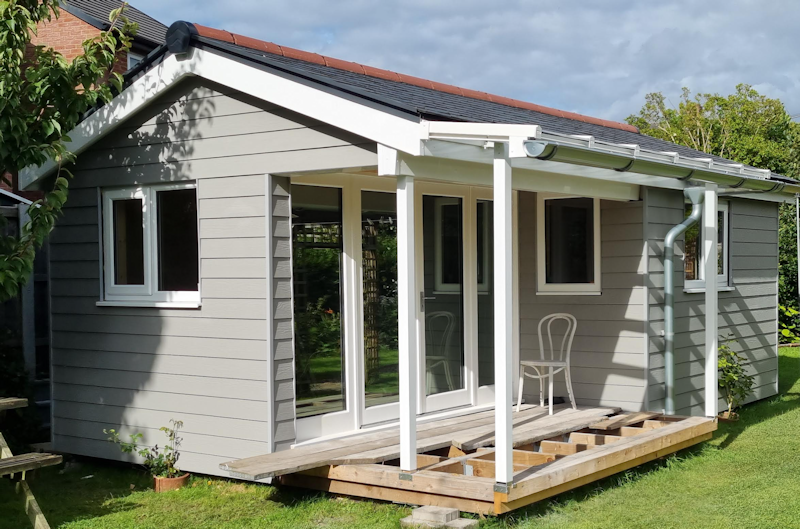
Getting the cladding on means the building is really taking shape. In this example the cladding is pre-painted cement plank, but could be profiled steel or various styles of timber.
Also, in this image can be seen an aluminium frame canopy, uPVC roofline and galvanised steel guttering.
All these premium products help to ensure the durability of the building.
Cladding installation provides an opportunity for the customer to provide some of the labour to cut the planks to length and screw them to the support battens.
Finishing the Outside
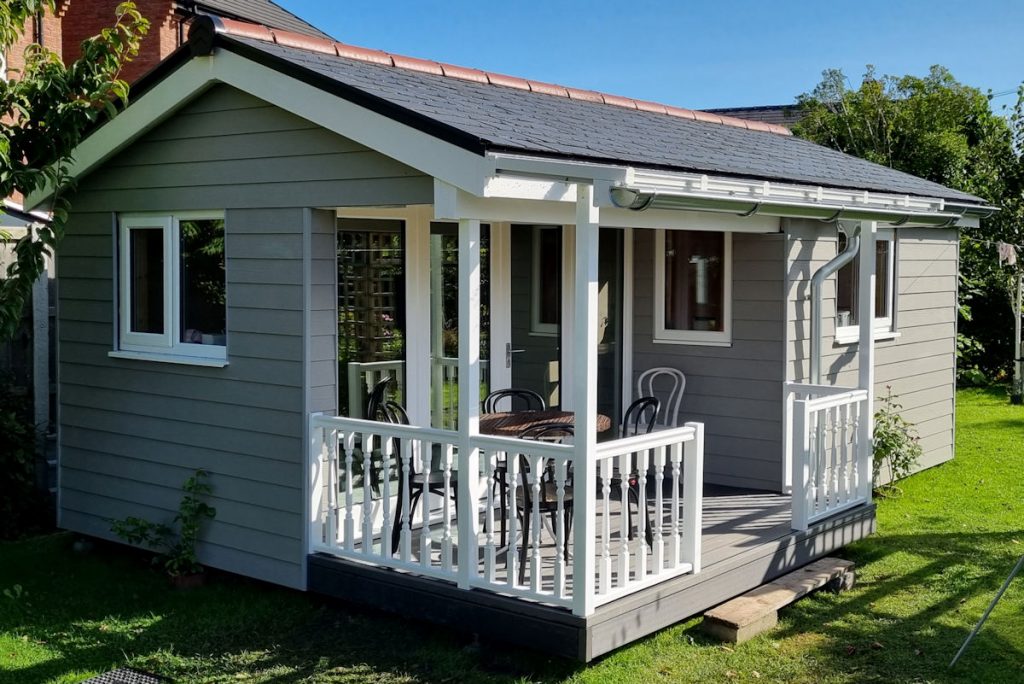
Composite decking and railings complete this building
The finishing touches outside will, of course, depend on the actual building being constructed
Moving Inside
Internally, there are many choices of materials and finishes.
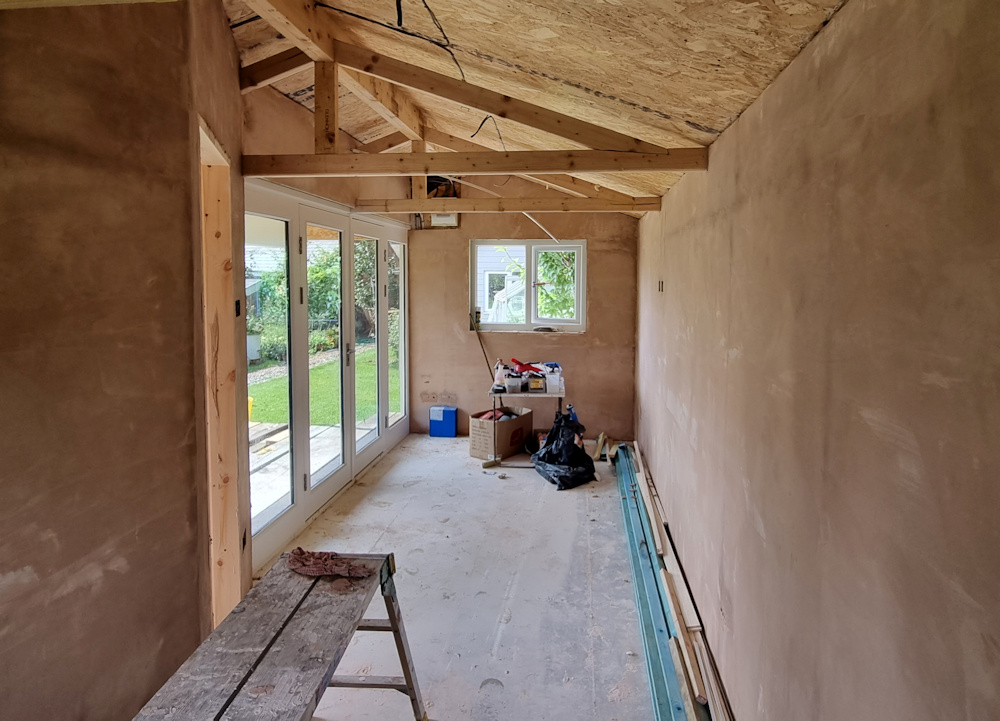
In this example, the walls are battened and plaster-boarded, and then skimmed for paint.
The ceiling is to be boarded in tongue and groove panelling. At this stage some provision from external trades may be required to ensure any wiring and electrical supplies are professionally installed and tested.
What Will You Use Your Space For?
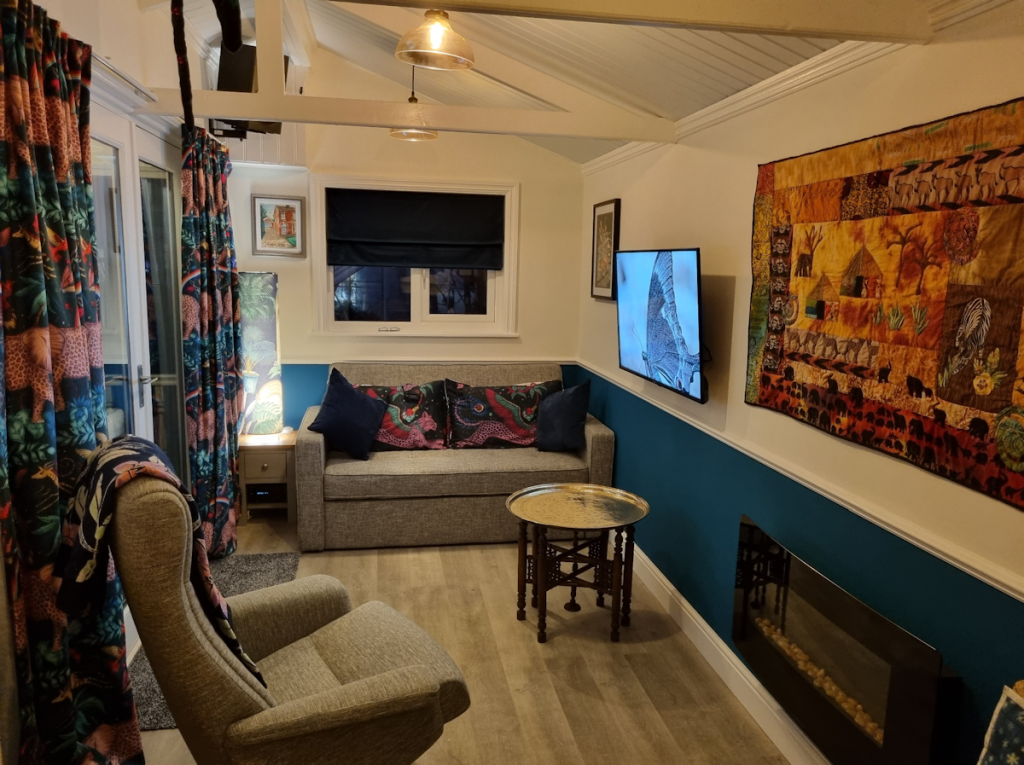
A Garden Room is a special space you can use for so many different uses.
Perhaps it’s a hobby room, or gym, or art studio, or office, or perhaps just some extra space to chill out in the garden.
It is a unique opportunity to style and decorate it in a way that doesn’t necessarily have to fit in with the rest of your house, allowing eclectic styles and materials to be used.
Hoole Handyman can help you achieve a very high standard building at a cost close to that of the cheaper, flimsier constructions by helping you to utilise your own labour and achieve the commensurate cost savings.
Interested? Fill in our contact form or give us a call